
Looks like you're visiting from {country}...
Switch to our {language} site for local pricing and products
Merchant insights
Inventory management explained: What it is and why it matters
Keeping track of inventory is one of the most important parts of running a business.
IN THIS ARTICLE
This is a div block with a Webflow interaction that will be triggered when the heading is in the view.
.avif)
Too much stock ties up cash. Too little stock means missed sales, delays, and frustrated customers. The challenge is finding the right balance – and staying on top of it day to day.
That’s where inventory management comes in.
In this guide, we’ll explain what inventory management is, the different types of inventory businesses work with, why it matters, and how tools like POS systems can make the process much easier.
Key takeaways:
- Inventory management is the process of tracking, organising, and controlling stock
- Good inventory management helps reduce waste, avoid stock shortages, and improve cash flow
- Inventory includes raw materials, work-in-progress items, finished goods, and operational supplies
- A POS system can help automate inventory tracking and give you a clearer overview of your business
What is inventory management?
Inventory management is the process of tracking and controlling the products, materials, and supplies your business uses and sells.
The goal is simple:
- Have enough stock to meet customer demand
- Avoid over-ordering or running out
- Keep operations running smoothly
For some businesses, inventory management is handled manually. Others use software or POS systems to track inventory automatically in real time.
Either way, inventory management is ultimately about staying organised and keeping control of your business.
What is inventory?
Inventory refers to the goods and materials a business uses, stores, or sells. That can mean different things depending on the type of business you run.
A retailer might track clothing, accessories, or packaged goods. A café might track coffee beans, milk, takeaway cups, and ingredients. A salon might track products used during appointments.
Inventory categories
Inventory is usually grouped into four categories:
1. Raw materials and components
These are the basic materials used to create products or deliver services.
Examples include:
- Coffee beans in a café
- Fabric in a clothing business
- Ingredients in a restaurant
- Spare parts in a repair business
These items haven’t yet become a finished product.
2. Work in progress (WIP)
Work in progress refers to items that are currently being prepared or produced but aren’t finished yet.
For example:
- A meal being prepared in a restaurant
- Furniture being assembled
- Products being packaged before sale
This stage sits between raw materials and finished goods.
3. Finished goods
Finished goods are products ready to be sold to customers.
Examples include:
- Clothing on shop shelves
- Drinks ready to serve
- Packaged retail products
- Completed customer orders
This is the inventory most businesses think about day to day.
4. MRO inventory
MRO stands for maintenance, repair, and operations. These are the supplies a business needs to operate, even if they aren’t sold directly.
Examples include:
- Cleaning products
- Printer paper
- Packaging materials
- Kitchen equipment supplies
MRO inventory is easy to overlook, but it still affects daily operations.
What’s the difference between inventory and stock?
The terms inventory and stock are often used interchangeably, and in many businesses they mean almost the same thing.
Generally speaking:
- Stock usually refers to finished products ready to sell
- Inventory is broader and includes raw materials, supplies, and unfinished goods too
In day-to-day business conversations, most people use both terms casually.
Why is inventory management so important?
Inventory directly affects cash flow, customer experience, and operational efficiency.
Without good inventory management, businesses can quickly run into problems like:
- Running out of popular products
- Ordering too much stock
- Wasting money on unsold inventory
- Delays during busy periods
- Poor visibility over what’s selling
For small and medium-sized businesses especially, staying organised matters. You don’t want money tied up in products you don’t need – or customers leaving because something is unavailable.
Good inventory management helps you make better decisions with clearer information.
The benefits of inventory management
Good inventory management helps your business run more smoothly day to day. It gives you better visibility over what you have in stock, reduces unnecessary costs, and makes it easier to stay organised when things get busy.
The benefits of good inventory management include:
- Better visibility: You can see what’s in stock, what’s selling, and what needs restocking without relying on guesswork.
- Fewer stock shortages: Tracking inventory properly helps you avoid running out of popular items during busy periods.
- Less waste: You’re less likely to over-order products that don’t sell or expire before use.
- Improved cash flow: Inventory costs money. Managing it properly helps you avoid tying up unnecessary cash in excess stock.
- Smoother operations: When inventory is organised, staff can work faster and more confidently.
- A better customer experience: Customers expect products to be available. Good inventory management helps you meet demand consistently.
In short, whether you run a shop, café, restaurant, or service business, the right inventory setup can help you save time, improve efficiency, and make more confident decisions.
Types of inventory management
Businesses use different inventory management methods depending on their size and workflow.
Here are some of the most common approaches.
Manual inventory management
Manual inventory management involves tracking stock manually using spreadsheets or written records. This can work for very small businesses, but it becomes difficult to manage as inventory grows.
Perpetual inventory management
This system updates inventory automatically whenever a sale happens.
Modern POS systems, like Flatpay, use perpetual inventory management because it provides live stock tracking, reduces manual work, and makes it easy to stay on top of inventory.
Just-in-time (JIT) inventory management
With JIT, businesses order stock only when needed to reduce storage costs and waste. This approach requires careful planning and reliable suppliers.
What are vendor-managed inventory (VMI) and supplier-managed inventory (SMI)?
Vendor-managed inventory (VMI) and supplier-managed inventory (SMI) are systems where the supplier helps manage stock levels for the business.
Instead of the business placing every order manually, the supplier monitors inventory and replenishes products when needed.
This can help reduce:
- Stock shortages
- Manual admin
- Ordering delays
These systems are more common in larger operations or businesses with predictable supply patterns.
For most SMEs, though, inventory management is still handled in-house. Shops, cafés, restaurants, and service businesses usually need to track stock levels, monitor sales, and manage reordering themselves.
That’s why having a simple, reliable system matters. The easier it is to see what’s selling and what needs restocking, the easier it is to stay organised and avoid unnecessary stress day to day.
How a POS system can help with inventory management
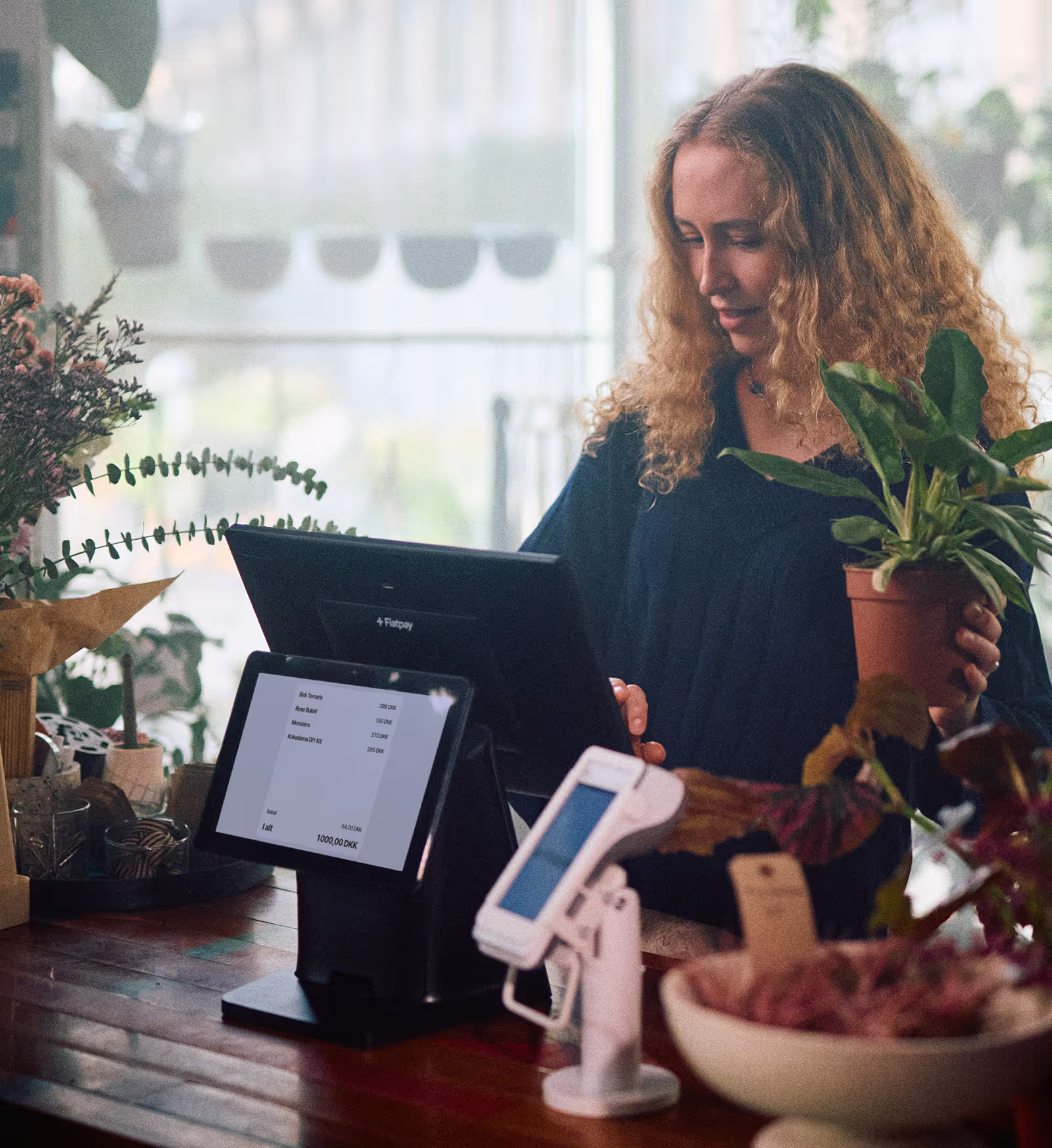
For many businesses, inventory management becomes much easier when it’s connected to the POS system.
A modern POS can automatically:
- Update stock levels when items sell
- Track sales in real time
- Show what’s selling most
- Help identify low-stock products
- Generate reports and insights
That means less manual admin and a clearer overview of your business.
Instead of counting inventory constantly or updating spreadsheets manually, your system helps keep everything organised in the background.
For small and medium-sized businesses, that can save time and reduce mistakes – especially during busy periods.
A simpler way to stay on top of inventory
Inventory management doesn’t need to be complicated. The important thing is having clear visibility, reliable systems, and tools that help your business run smoothly day to day.
Flatpay is built to help you simplify operations:
- No monthly fees
- No hidden charges
- Real-time business insights
Our POS solutions are designed to connect payments, sales, and reporting – all in one place.
Flatpay helps you stay organised and in control of your inventory so you can focus on what matters most: your business.


Accepting payments for any business, anytime, anywhere
Two solutions designed to get you paid.


Getting paid starts here
Let us get you set up to accept card payments and manage orders in one place. Get started today and see how smooth running your business can be with Flatpay.

