
Looks like you're visiting from {country}...
Switch to our {language} site for local pricing and products
Merchant insights
Operating profit explained: What is it, and how is it calculated?
Understanding your numbers is a big part of running a healthy business. Not every financial metric tells you something useful day to day – but operating profit does.
IN THIS ARTICLE
This is a div block with a Webflow interaction that will be triggered when the heading is in the view.
.avif)
Operating profit helps you understand how profitable your business is based on normal operations. It gives you a clearer picture of how the business is performing – and for small businesses, that matters.
We’ll explain what operating profit is, how to calculate it, and how tools like POS systems can help you stay on top of it.
Key takeaways:
- Operating profit shows how much profit your business makes from normal operations, before things like tax and financing costs are taken into account.
- It’s calculated by subtracting operating costs from revenue.
- Tracking operating profit helps you understand efficiency, costs, and overall business performance.
- POS systems can help by improving visibility over sales, inventory, and day-to-day operations.
What is operating profit?
Operating profit is the profit your business makes after covering the costs of running day-to-day operations.
That includes things like:
- Rent
- Utilities
- Staff wages
- Inventory or product costs
- Operational expenses
It does not include:
- Taxes
- Interest payments
- One-off financial gains or losses
In simple terms, operating profit shows how profitable your core business activities are. It answers an important question: is the business itself operating efficiently and profitably?
Why is operating profit so important?
Operating profit gives you a clearer view of business performance than revenue alone.
Revenue tells you how much money is coming in. Operating profit helps show how much of that money your business actually keeps after day-to-day costs.
For small businesses, this is especially useful because it helps you:
- Understand profitability
- Monitor operating costs
- Identify areas where margins are tightening
- Make better business decisions
- Plan for growth more confidently
A business can have strong sales but still struggle with profitability if operating costs are too high. That’s why operating profit matters.
How to calculate operating profit
Operating profit is calculated by taking your revenue and subtracting the costs involved in running your business day to day.
The formula looks like this:
Operating Profit = Revenue − COGS − Operating Expenses
That includes:
- COGS (cost of goods sold) – the direct costs of producing or buying the products you sell
- Operating expenses – everyday business costs like wages, rent, utilities, software, and marketing
In formal accounting, businesses may also deduct depreciation and amortisation. These are accounting costs linked to business assets and equipment over time.
The final figure shows how much profit your business makes from normal operations before tax and financing costs are taken into account.
Example of operating profit
Let’s say a small café generates £25,000 in monthly revenue.
Its costs look like this:
Cost of goods sold (COGS)
- Ingredients and supplies: £5,000
Operating expenses
- Rent: £3,000
- Staff wages: £9,000
- Utilities and software: £2,000
Total costs:
- £19,000
The operating profit calculation would be:
£25,000 − £5,000 − £14,000 = £6,000
So the café’s operating profit is:
- £6,000
What does operating profit tell you?
Operating profit helps you understand how efficiently your business is running.
A healthy operating profit can indicate:
- Strong pricing
- Good cost control
- Efficient operations
- Sustainable business performance
A low operating profit can suggest:
- High operating costs
- Inefficient processes
- Tight margins
- Overspending in certain areas
Because it focuses only on core business operations, operating profit is often one of the most useful ways to evaluate overall business health.
What is operating profit margin?
Operating profit margin shows operating profit as a percentage of revenue. It helps you understand how much profit your business keeps from each pound of revenue after operating costs are deducted.
The formula looks like this:
Operating Profit Margin = Operating Profit / Revenue × 100
For example:
- Revenue: £25,000
- Operating profit: £6,000
The calculation would be:
6,000 / 25,000 × 100 = 24%
That means the business keeps 24% of its revenue as operating profit.
What affects operating profit?
Several factors can impact operating profit, including:
Inventory costs
Over-ordering can tie up cash in products that don’t sell, while under-ordering can lead to missed sales and frustrated customers. Waste, spoilage, and poor stock visibility can also affect profitability.
Staffing
Labour is often one of the biggest operating costs for SMEs. Overstaffing can increase expenses unnecessarily, while understaffing can slow service and affect customer experience.
Pricing
Pricing products or services too low can make it difficult to maintain healthy margins, even if sales are strong. On the other hand, pricing too high can affect demand. A clear understanding of your costs is essential.
Operational efficiency
Slow workflows, manual admin, and disconnected systems can all create unnecessary costs. More efficient operations help businesses save time and reduce friction day to day.
Busy periods
Peak hours often put the most pressure on a business. If your systems can’t handle peak periods efficiently, it can affect both revenue and customer experience.
How a POS system can help improve operating profit
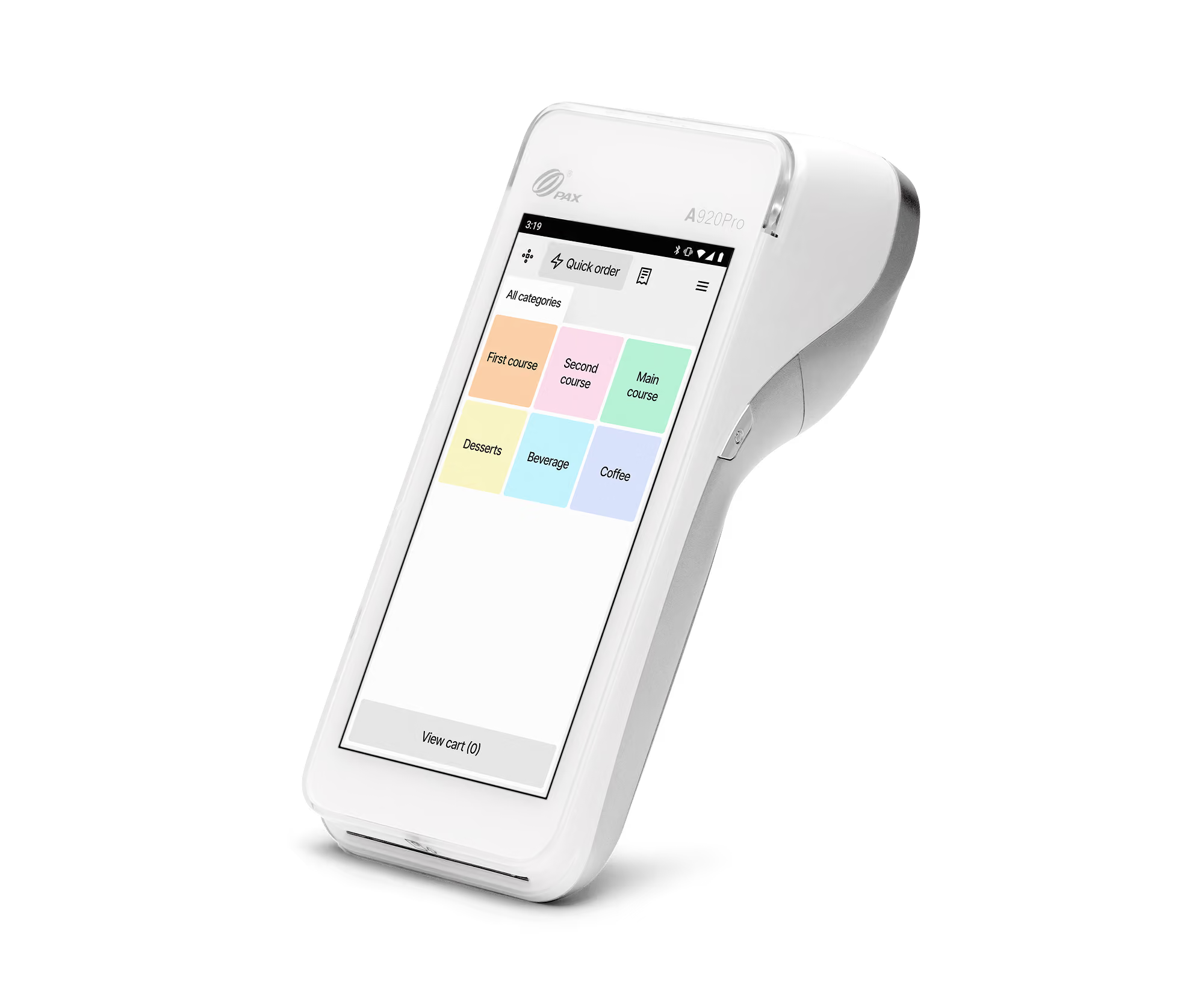
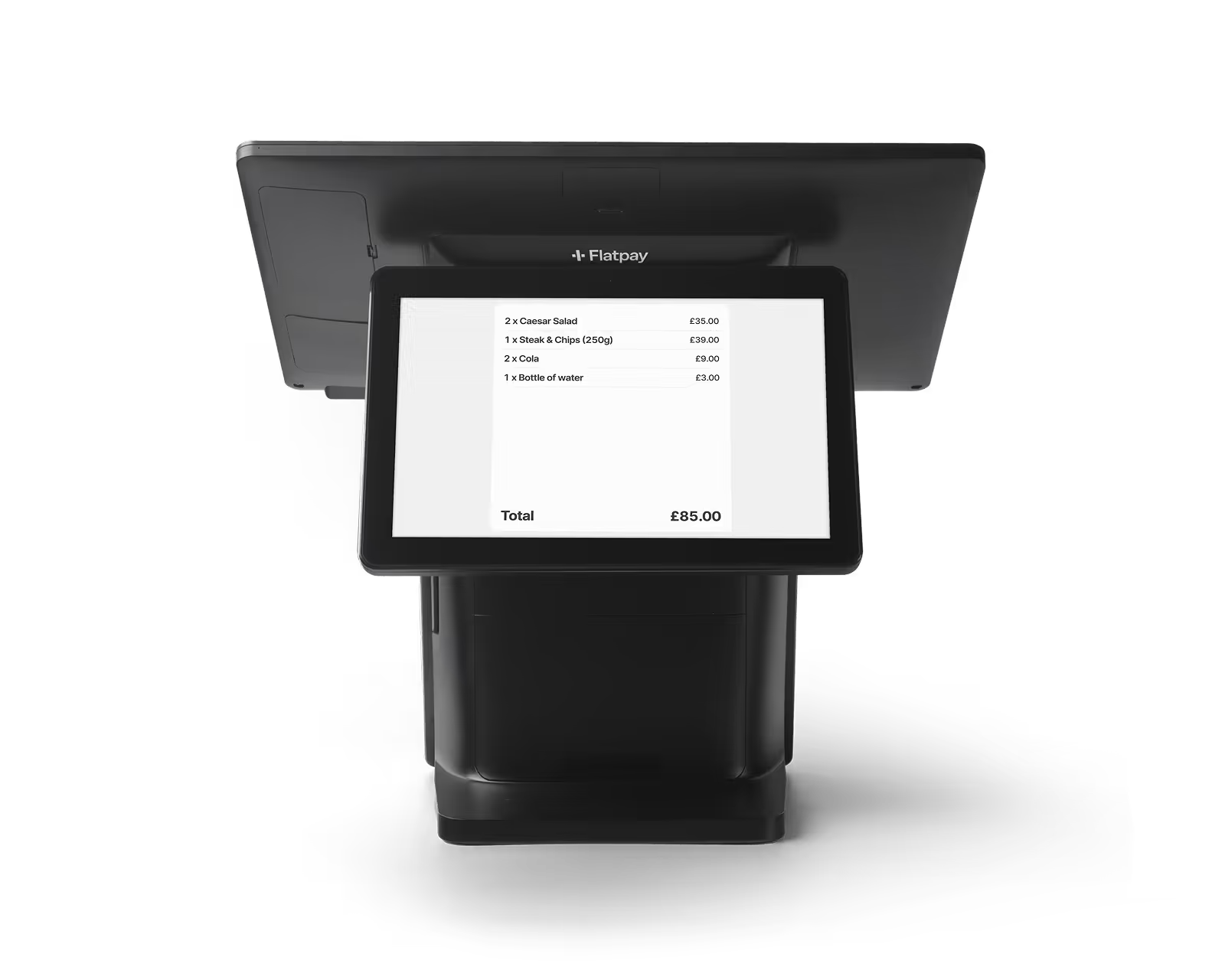
A POS system does more than process payments. It can also help improve visibility and operational efficiency – both of which affect profitability.
A modern POS system can help you:
- Track sales in real time
- Identify best-selling products
- Reduce manual admin
- Improve reporting accuracy
- Monitor business performance more clearly
For retail and hospitality businesses especially, inventory management also plays a major role in profitability. Better inventory tracking can help reduce waste, overstocking, stock shortages, and unnecessary spending.
When your sales, reporting, and inventory are connected in one system, it becomes easier to spot trends and make informed decisions. For small businesses, that visibility matters.
Common questions about operating profit
What does operating profit tell you?
Operating profit shows how profitable your business is from normal day-to-day operations, before tax and financing costs are included.
How do you calculate operating profit?
You calculate operating profit by subtracting operating expenses from revenue.
How do you find operating profit margin?
Divide operating profit by revenue, then multiply by 100 to get the percentage.
Is operating profit the same as net profit?
No. Operating profit focuses only on operational costs. Net profit also includes taxes, interest, and other financial factors.
Can a business have high revenue but low operating profit?
Yes. Strong sales don’t always mean strong profitability. High operating costs can reduce operating profit significantly.
A clearer view of your business performance
Operating profit helps you understand how your business is really performing day to day.
For small businesses, that visibility is important. It helps you stay in control of costs, monitor efficiency, and make better decisions as your business grows.
The easier it is to track sales, inventory, and performance, the easier it becomes to protect your margins and improve profitability over time.
Flatpay is built to help you simplify operations:
- No monthly fees
- No hidden charges
- Clear real-time reporting
Connect payments, reporting, and business insights in one place with Flatpay’s POS solutions. Keep track of your operating profit – and stay on top of your business.


Accepting payments for any business, anytime, anywhere
Two solutions designed to get you paid.


Getting paid starts here
Let us get you set up to accept card payments and manage orders in one place. Get started today and see how smooth running your business can be with Flatpay.

