
Looks like you're visiting from {country}...
Switch to our {language} site for local pricing and products
Merchant insights
NFC: What is it, and how does it work?
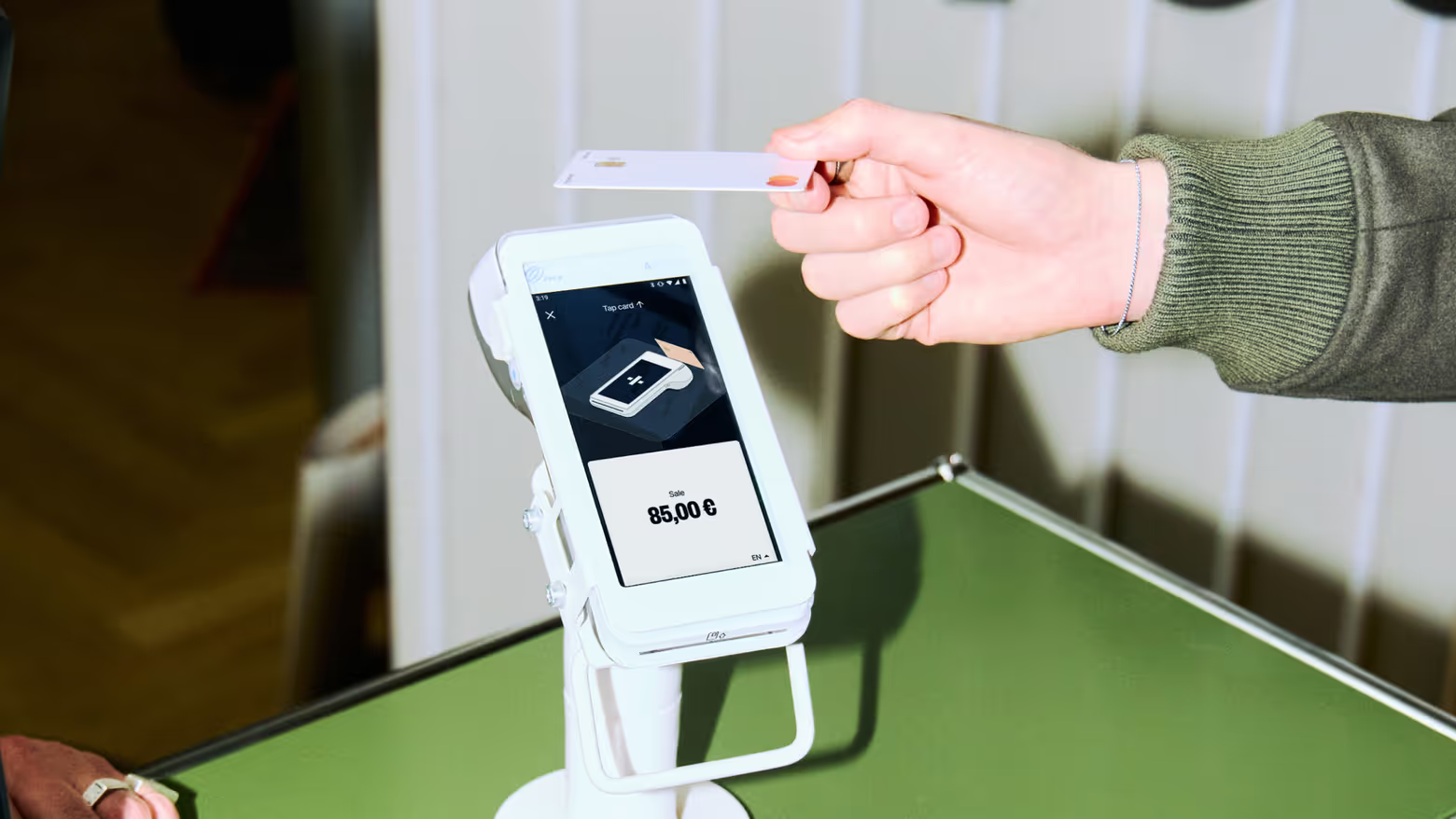
You’ve probably used NFC without thinking about it. A customer taps their card and the payment is approved – all done in seconds.
IN THIS ARTICLE
This is a div block with a Webflow interaction that will be triggered when the heading is in the view.
.avif)
It’s fast, simple, and now expected. But what does NFC actually mean, and how does it work behind the scenes?
We’ll explain what NFC is, how it works, and why it matters for your business.
Key takeaways:
- NFC (near-field communication) is the technology behind contactless payments.
- It allows devices to communicate securely when they’re just a few centimetres apart.
- NFC makes payments faster, helping you keep queues moving and service running smoothly.
- Most modern card machines support NFC as standard.
- It’s secure, reliable, and widely used across cards and mobile wallets.
- For businesses, NFC helps simplify payments and improve the customer experience.
What does NFC mean?
NFC stands for near-field communication. It’s a short-range wireless technology that allows two devices to communicate when they’re very close to each other – typically just a few centimetres apart.
In practice, NFC is what makes contactless payments possible. When a customer taps their card or phone on a card machine, NFC is what allows the payment to go through.
What is NFC in payments?
In payments, NFC is the technology behind contactless transactions. Instead of inserting a card or handling cash, customers can simply tap and go.
For businesses, that means:
- Faster checkout
- Shorter queues
- Less friction during busy periods
Most modern card machines support NFC as standard, so you can accept contactless payments without any extra setup.
How does NFC work?
NFC is designed to be simple and fast. Here’s what happens during a typical payment:
- Two devices come close together
A customer taps their card or phone on your card machine. - A connection is created instantly
The devices communicate using a short-range wireless signal. - Payment data is transferred securely
The card or phone sends encrypted payment information. - The transaction is processed
The payment provider sends the request for approval. - Payment is confirmed
The transaction is approved within seconds.
From your side, it’s straightforward: tap, confirm, done.
Where is NFC used?
NFC is used in a range of everyday situations, but payments are the most common.
That incudes:
- Contactless payments – debit and credit cards, and mobile wallets like Apple Pay and Google Pay
- Business payments – card machines, POS systems, and tap-to-pay devices
For most businesses, NFC is simply part of taking payments every day.
Why NFC matters for small businesses
NFC isn’t just a technical feature – it directly affects how your business runs day to day.
Faster service
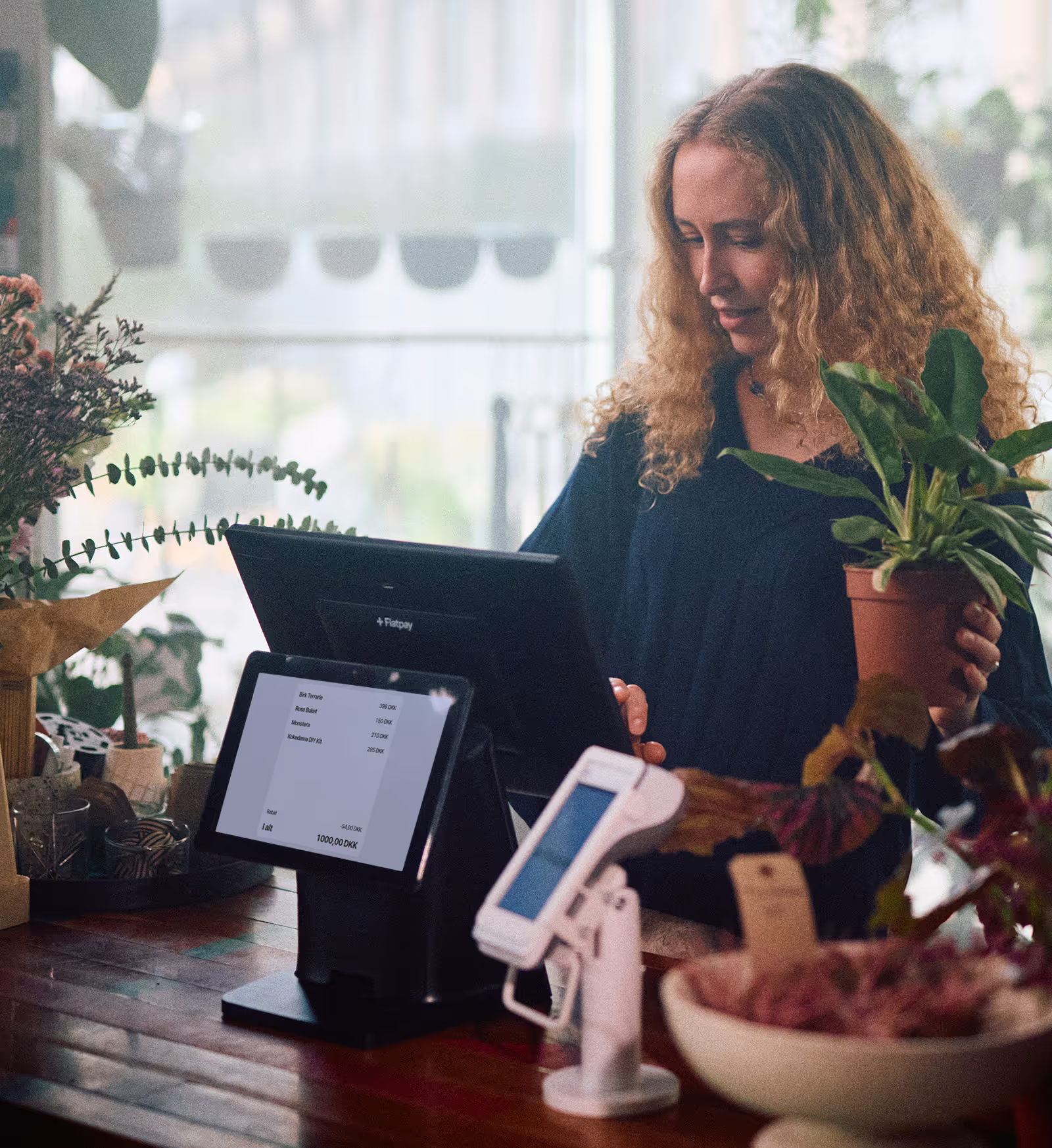
Contactless payments take seconds. That helps you keep queues moving and serve more customers – especially during peak hours.
Easy for staff
There’s no complex process. Tap, confirm, done. That makes it easy to train staff and reduces mistakes under pressure.
What customers expect
Most customers now expect to pay by card or phone. Offering contactless payments isn’t a bonus – it’s the standard.
Less friction
No cash handling. No PIN entry for smaller accounts. Just quick, simple payments.
Consistent experience
NFC works the same way every time, which helps avoid confusion and keep service smooth and predictable.
Is NFC secure?
Yes – NFC is designed with security in mind. Here’s why it’s considered safe:
- Short range – devices need to be very close together
- Encrypted data – payment information is protected during transfer
- Built-in safeguards – higher-value transactions may require PIN or biometric approval
In practice, NFC payments are just as secure as chip-and-PIN transactions.
NFC vs RFID – what’s the difference?
You might also come across RFID, which stands for radio frequency identification.
RFID is a wireless technology used to identify and track objects using radio signals. It’s commonly used in things like:
- Stock and inventory tracking
- Key cards and access control
- Transport cards and toll systems
NFC is actually a type of RFID, but it’s designed for closer, more secure transactions.
Here’s how they differ:
- Range: RFID can work over longer distances, whilst NFC only works within a few centimetres.
- Security: NFC’s short range makes it more secure for payments.
- Communication: NFC allows two-way communication (e.g. between a card and a terminal), whilst many RFID systems are one-way.
For payments, NFC is the standard because it’s fast, secure, and designed for quick, reliable transactions.
Common questions about NFC
What does NFC stand for?
NFC stands for near-field communication.
Is NFC the same as contactless?
Not quite. NFC is the technology behind contactless payments. When you tap to pay, you’re using NFC.
Do I need NFC to accept contactless payments?
Yes. Your card machine needs to support NFC to accept contactless card and mobile payments.
Do all card machines support NFC?
Most modern card machines do. If you’re using an up-to-date device, contactless payments are usually built in.
Can customers pay with their phone using NFC?
Yes. Mobile wallets like Apple Pay and Google Pay use NFC to make payments.
How far does NFC work?
NFC works at very short range – typically a few centimetres. That’s what makes it secure and reliable.
A simpler way to take contactless payments
NFC is what makes modern payments fast and effortless. It’s the technology behind every tap, every quick checkout, and every smooth transaction.
If you accept card payments today, NFC is likely already part of your setup. Most of the time, it’s not something you need to think about – it just needs to work.
Flatpay is built to make contactless payments simple:
- No monthly fees
- No hidden charges
- One simple, flat transaction rate
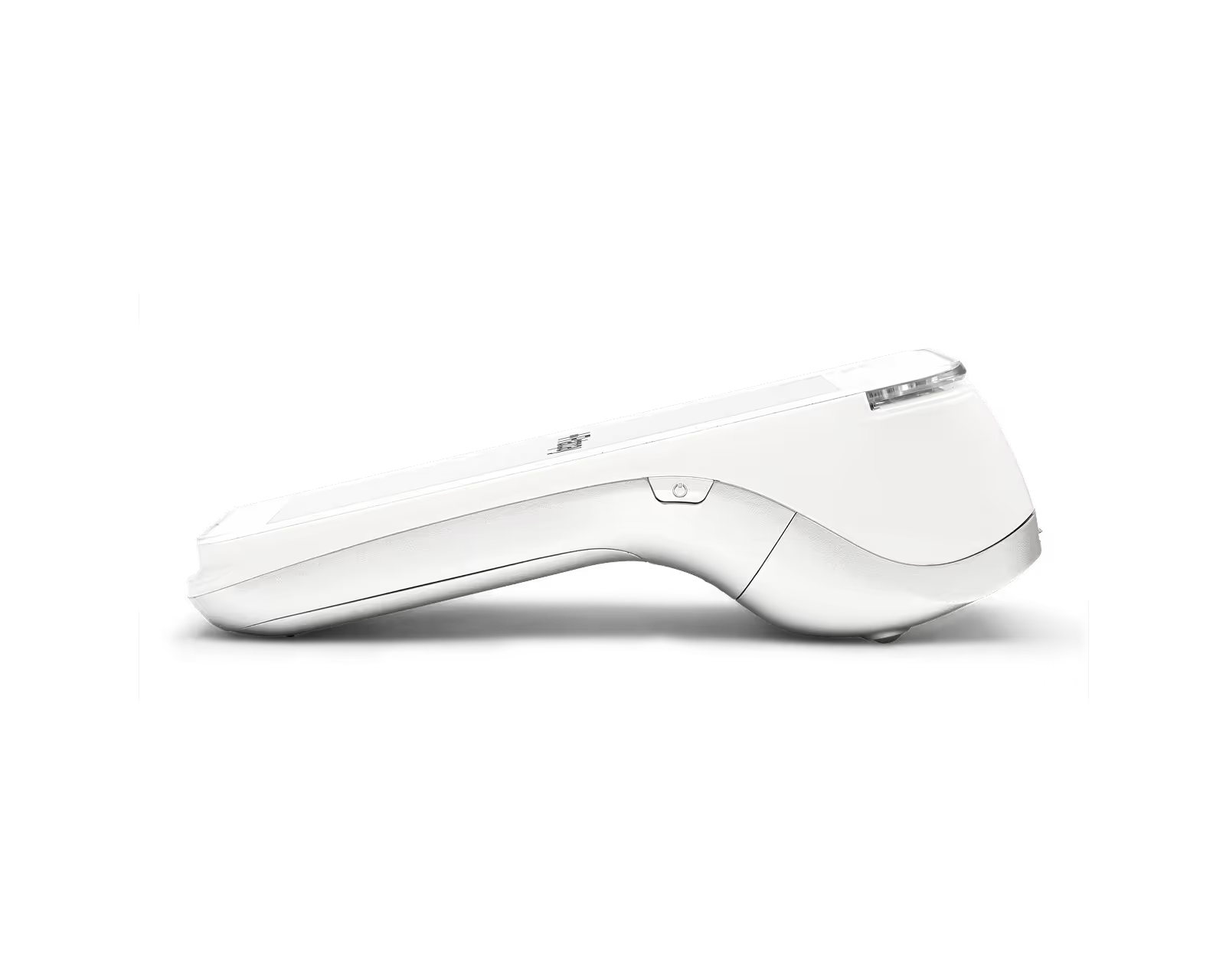
With fast, reliable card machines and straightforward pricing, you can take payments without slowing things down or second-guessing your costs.
That means you can focus on running your business – not your payments.
Ready to accept contactless payments the simple way?

Accepting payments for any business, anytime, anywhere
Two solutions designed to get you paid.


Getting paid starts here
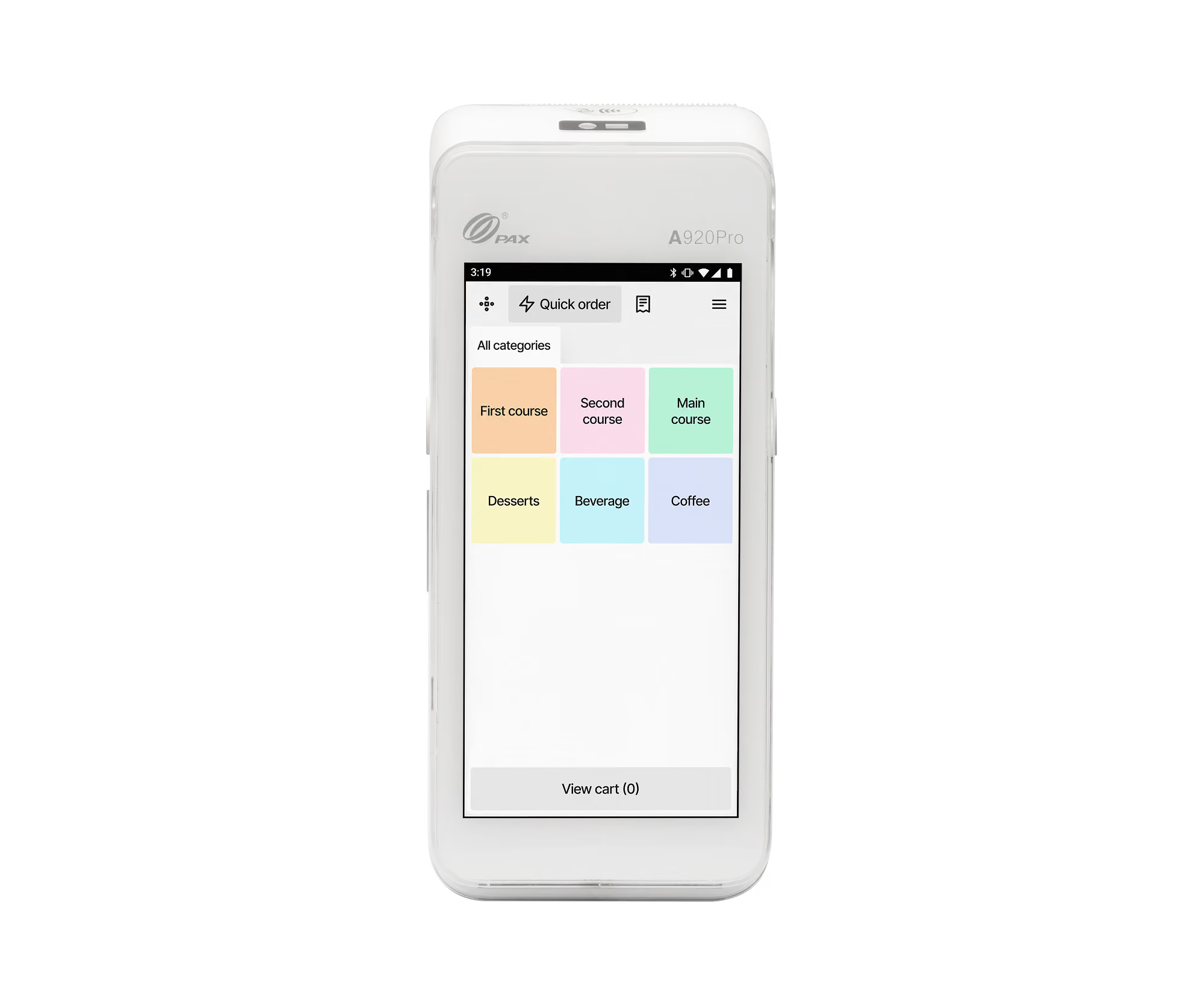
Let us get you set up to accept card payments and manage orders in one place. Get started today and see how smooth running your business can be with Flatpay.

