
Looks like you're visiting from {country}...
Switch to our {language} site for local pricing and products
Credit card processing: what is it, and how does it work?

IN THIS ARTICLE
This is a div block with a Webflow interaction that will be triggered when the heading is in the view.

Card payments are now part of everyday business. Customers expect to tap, pay, and move on quickly – whether they’re shopping in-store, ordering takeaway, or paying at a salon or café.
But behind every card payment is a process most businesses never really see: credit card processing.
In simple terms, credit card processing is what allows businesses to accept card payments securely and receive the money in their account.
We’ll explain what credit card processing is, how it works, and what small businesses should know about processing fees and payment systems.
Key takeaways:
- Credit card processing is the system that securely handles card payments between customers, banks, and businesses.
- The process happens in seconds, from payment approval to transaction confirmation.
- Modern payment systems make credit card processing fast, reliable, and easy for small businesses.
- Processing fees vary depending on the provider and pricing structure.
What is credit card processing?
Credit card processing is the system that allows businesses to accept payments by credit or debit card. It’s the technology and financial infrastructure that moves money securely from the customer’s bank account to the business.
Whenever a customer taps or inserts a card, uses Apple Pay or Google Pay, or pays online, the payment goes through a credit card processing system.
Although the process sounds technical, it’s designed to feel simple and seamless for both businesses and customers.
How does credit card processing work?
Most card payments follow the same basic process. Here’s what happens behind the scenes when a customer pays.
1. The customer makes a payment
The process starts when the customer taps, inserts, or swipes their card – or pays using their phone or smartwatch.
This usually happens through:
- A card machine
- A POS system
- An online checkout
Modern payment terminals support contactless payments as standard, making transactions faster and smoother during busy periods.
2. The payment information is sent securely
The card machine or payment system securely sends the payment information through the payment network.
At this stage, the system checks whether:
- The card is valid
- Sufficient funds are available
- The transaction appears legitimate
All of this happens using encrypted technology designed to keep payment data secure.
3. The bank approves or declines the transaction
The customer’s bank reviews the request and either:
- Approves the payment
- Declines the payment
If approved, the transaction continues automatically. This usually takes only a few seconds.
4. The sale is completed
Once approved:
- The business receives confirmation
- A receipt can be printed or sent digitally
- The sale is recorded automatically
From the customer’s perspective, the payment is complete almost instantly.
5. The funds are transferred to the business
After processing, the payment is settled and transferred to the business account.
Depending on the provider, payouts may happen daily, within a few business days, or on a scheduled basis.
Who is involved in credit card processing?
Several systems work together behind the scenes to process a payment.
The customer’s bank
The bank that issued the customer’s card.
The business’s payment provider
A payment provider is the company that processes the payment and provides the payment setup.
The card network
Card networks – companies like Visa and Mastercard – securely route payment information between banks and providers.
The merchant account
A merchant account is a business account used to receive card payments. Many modern payment providers simplify this process by bundling payment processing and merchant account services together.
Why credit card processing matters for small businesses
For SMEs, payment systems directly affect day-to-day operations.
Good credit card processing helps businesses:
- Serve customers faster
- Reduce queues
- Improve checkout flow
- Accept contactless payments easily
- Stay organised with automatic reporting
- Reduce manual admin
Most importantly, the system needs to work reliably during busy periods. Whether it’s a lunchtime rush, a busy retail weekend, or back-to-back salon appointments, smooth payments are an essential part of keeping service moving.
Credit card processing and POS systems
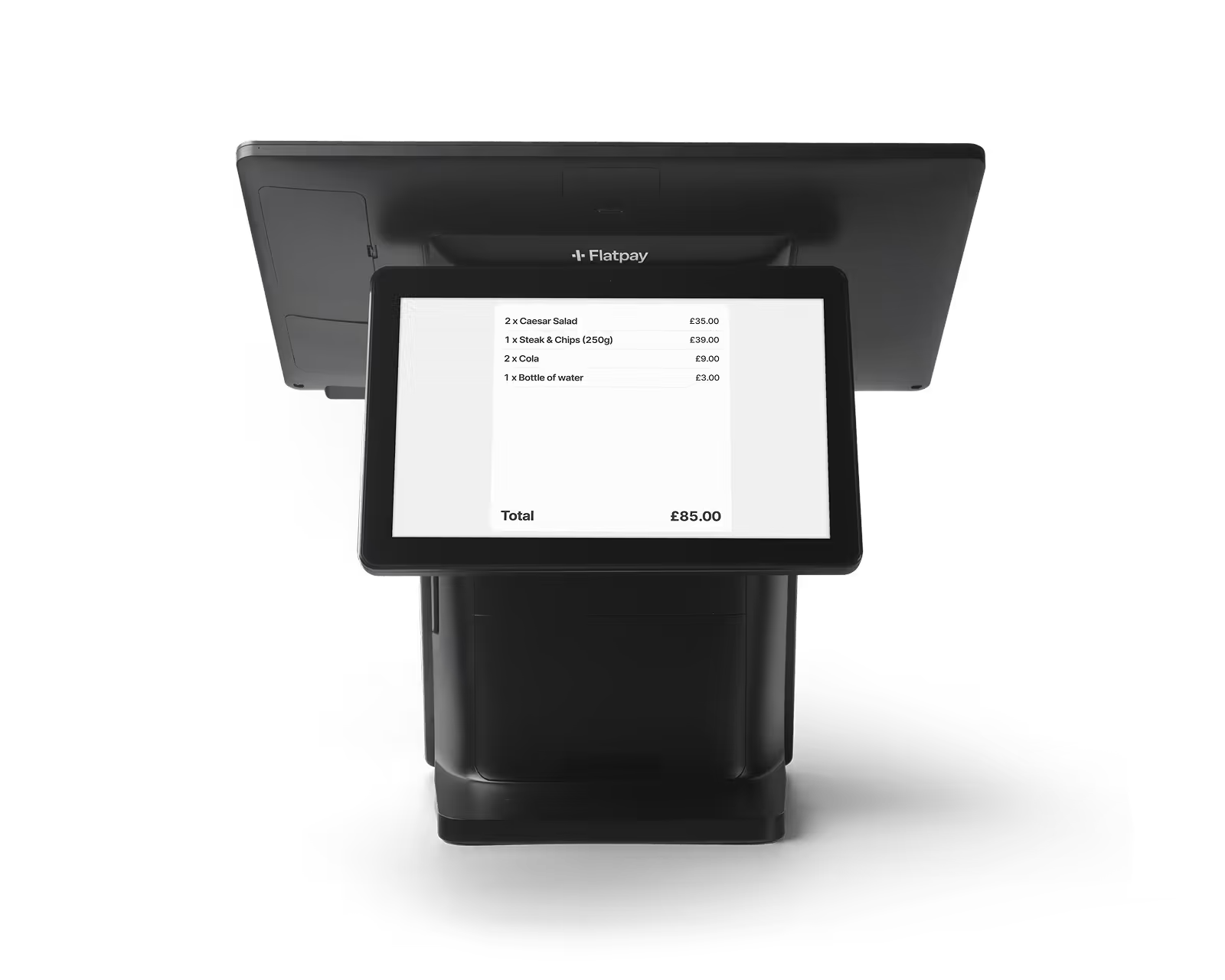
Today, credit card processing is often built directly into modern POS systems.
This means that from just one setup, businesses can manage:
- Payments
- Sales
- Reporting
- Inventory
- Orders
For many small businesses, this creates a much simpler workflow than juggling multiple systems separately.
What are credit card processing fees?
Every card payment comes with a processing fee. These fees are what businesses pay to securely process card transactions through the payment network.
Pricing structures vary between providers, but fees often include:
- Transaction fees
- Monthly fees
- Hardware costs
- Additional service charges
Some providers use variable pricing models, while others use fixed transaction rates. For many small businesses, predictable pricing is often easier to manage day to day.
For a full breakdown of pricing structures and costs, check out our guide to credit card machine fees.
Common questions about credit card processing
Is credit card processing the same as a card machine?
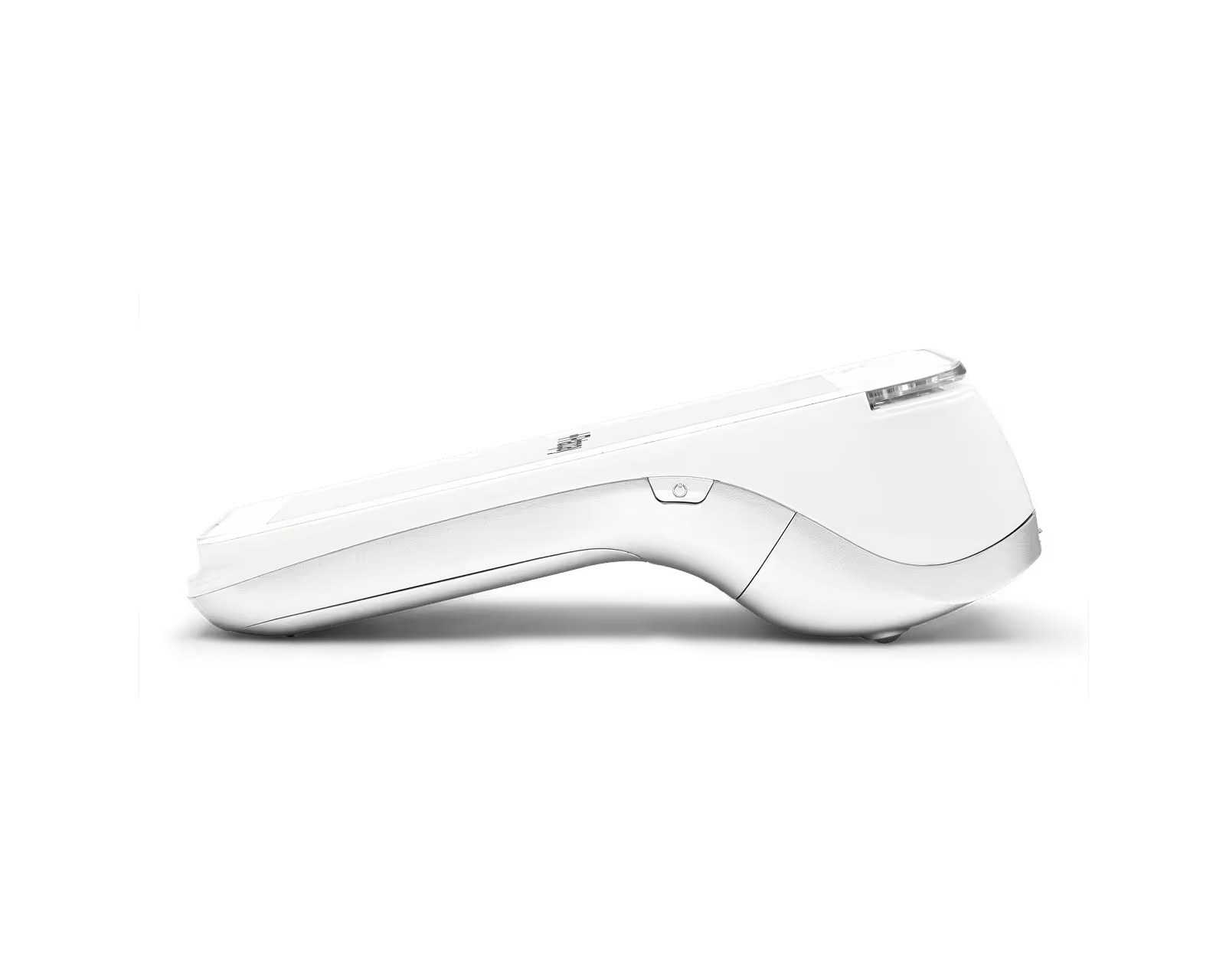
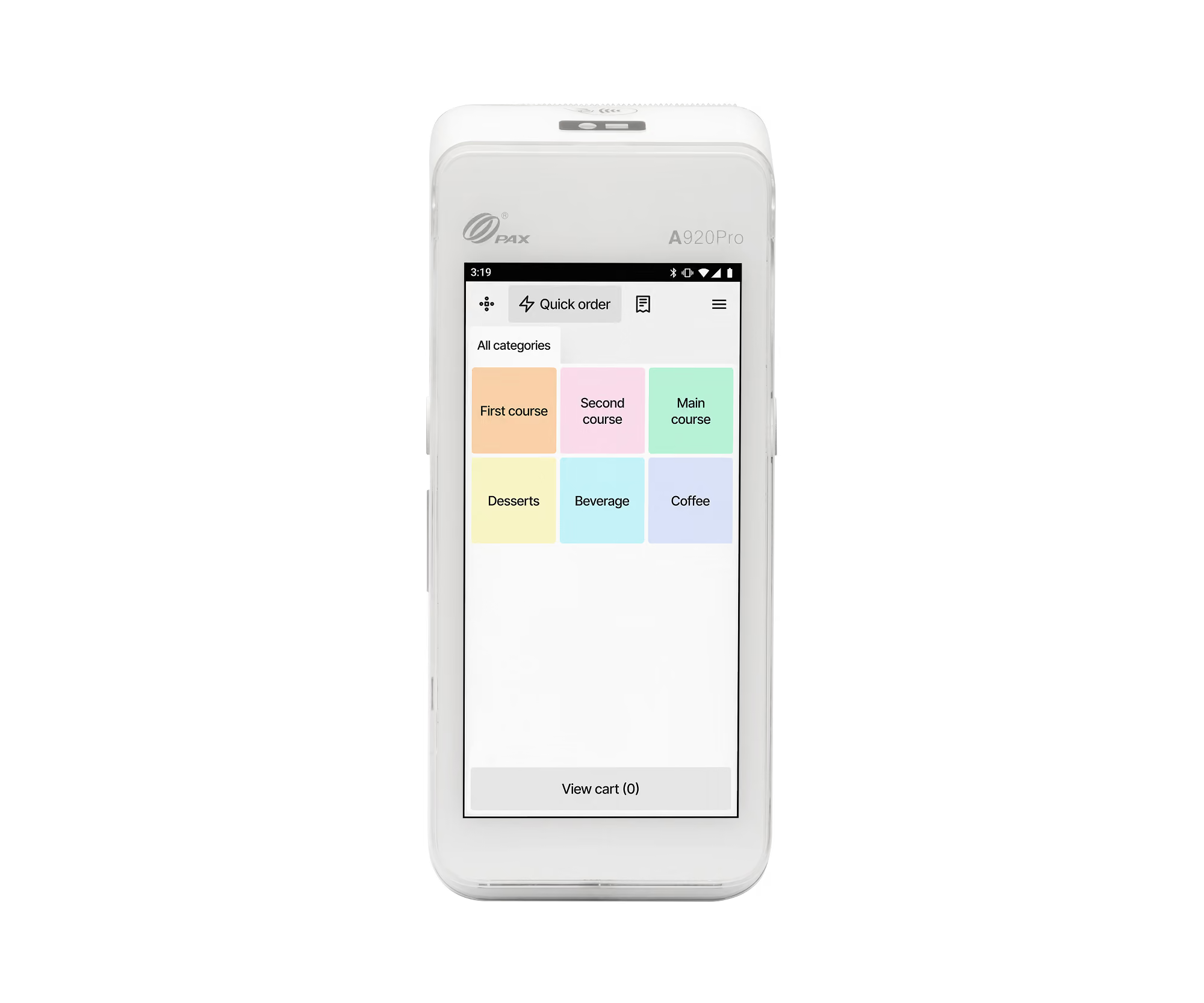
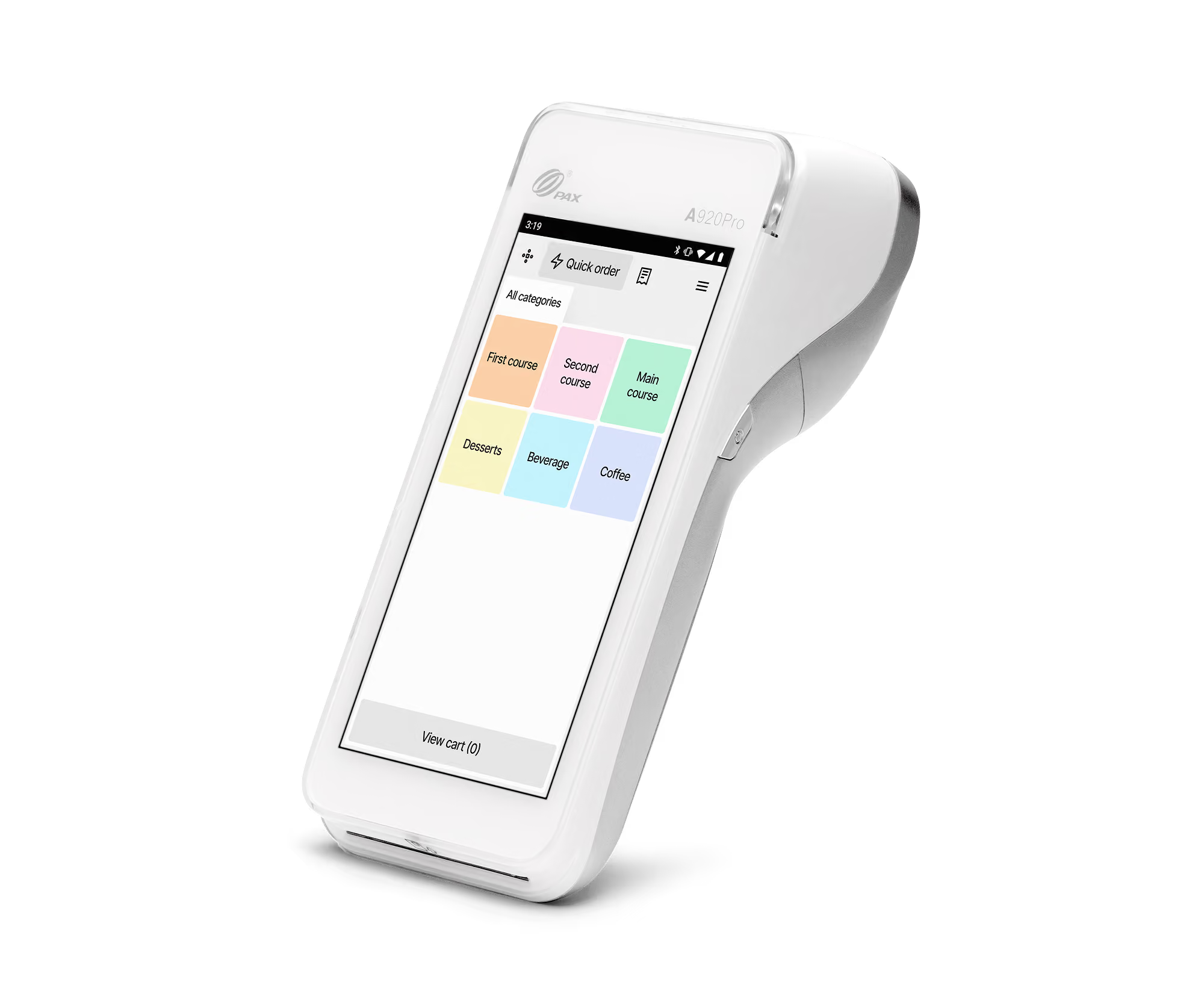
Not exactly. A card machine is the physical device customers use to pay. Credit card processing is the system working behind the scenes to securely approve and transfer the payment.
How long does credit card processing take?
Payment approval usually happens within seconds. Payout times vary depending on the provider, but businesses often receive funds within a few business days.
Can small businesses accept credit card payments?
Yes! Modern payment providers make it easy for small businesses to accept card and contactless payments with simple setups and portable hardware.
Is credit card processing secure?
Yes. Modern processing systems use encryption and security protocols designed to protect payment information and reduce fraud risk.
What’s the difference between credit card processing and payment processing?
The terms are often used interchangeably. Payment processing is slightly broader because it can also include debit cards, mobile wallets, and online payment methods.
Credit card processing for small businesses
For small businesses, credit card processing isn’t just about accepting payments – it’s about keeping day-to-day operations running smoothly.
Whether you run a café, retail shop, salon, takeaway, or service business, the priorities are usually the same:
- Fast payments
- Easy setup
- Predictable costs
- Reliable support
- Systems that work during busy periods
That’s why many SMEs look for payment solutions that are simple to manage and easy for staff to use.
Complicated pricing structures, long contracts, or systems that require extensive training can create unnecessary friction – especially for owner-led businesses already managing multiple responsibilities day to day.
A good credit card processing setup should help you:
- Keep queues moving
- Serve customers faster
- Reduce manual admin
- Stay on top of sales
- Understand your costs clearly
For many small businesses, portable card machines and integrated POS systems also make service more flexible. Staff can take payments anywhere in the business, while automatic reporting helps owners stay organised without relying on manual tracking.
Most importantly, the system needs to perform reliably when it gets busy. Because during peak periods, smooth payments directly affect both customer experience and operational flow.
That’s why many SMEs prefer solutions with straightforward pricing and simple day-to-day workflows – especially when costs and time both matter.
A simpler way to process payments
For small businesses, payments should feel simple. The right setup helps you stay organised and keep service moving. It gives you a clear understanding of costs and allows you to focus on customers instead of payment systems.
Flatpay is built to make card payments straightforward for SMEs:
- £0 monthly fees
- 1.69% flat transaction rate
- No hidden charges
- Fast, reliable card machines
- 24/7 human support
When payments work smoothly, everything else becomes easier too. Flatpay gives businesses a simple way to process payments confidently – without unnecessary complexity.
Ready to simplify your payments?
Accepting payments for any business, anytime, anywhere
Two solutions designed to get you paid.


Getting paid starts here
Let us get you set up to accept card payments and manage orders in one place. Get started today and see how smooth running your business can be with Flatpay.

