
Looks like you're visiting from {country}...
Switch to our {language} site for local pricing and products
Merchant insights
What is a merchant account? A simple guide for UK businesses
If you’ve ever looked into taking card payments, you’ve probably come across the term ‘merchant account’. But what exactly is a merchant account – and do you actually need one to take payments in the UK?

IN THIS ARTICLE
This is a div block with a Webflow interaction that will be triggered when the heading is in the view.
.avif)
We’ll explain what a merchant account is, how it works, and what role it plays in accepting card payments. We’ll also take a look at whether your business needs one and how to get started.
Key takeaways:
- A merchant account is a special type of account that allows businesses to accept card payments.
- It acts as a temporary holding account while card transactions are processed.
- Most businesses that accept card payments use a merchant account in some form.
- Many modern payment providers handle the merchant account as part of a complete payment solution.
What is a merchant account?
A merchant account is a type of business account used to process card payments.
When a customer pays by debit card, credit card, or mobile wallet, the money doesn’t usually go directly into your business account. Instead, it passes through a merchant account first before being transferred to you.
Think of it as a temporary holding account that sits between the customer’s and your business account.
Merchant accounts are one of the key components of the payment infrastructure that allows businesses to accept cashless payments.
You might also be interested in: Merchant services for small businesses: what are they, and how do they work?
How do merchant accounts work?
When a customer pays by card, several steps happen behind the scenes:
- The customer makes a payment
They tap, insert, or swipe their card, or pay online. - The payment is authorised
The card issuer checks whether the customer has sufficient funds available. - The funds enter the merchant account
Once approved, the payment is processed and temporarily held by the merchant account. - Funds are transferred to your business account
After processing and settlement, the money is deposited into your business bank account.
Most of this happens automatically – often within one to three business days.
Why do merchant accounts exist?
Merchant accounts help manage the flow of funds and reduce risk during payment processing.
They allow payment providers to:
- Verify transactions
- Handle payment settlements
- Manage refunds
- Process chargebacks
- Protect against fraud
Without merchant accounts, card payment processing would be much more difficult – and far less secure.
Do I need a merchant account?
In most cases, yes – if you want to accept card payments in the UK, you need a merchant account.
However, many businesses don’t need to open and manage a standalone merchant account themselves.
Traditionally, businesses would need:
- A merchant account provider
- A payment processor
- A card machine provider
- A business account
Today, many payment providers combine these services into one solution. That means businesses can start accepting payments without needing to arrange multiple separate services.
For small businesses, this often makes setup faster and easier.
How to get a merchant account
The process of getting a merchant account depends on the provider you choose.
Typically, it involves:
1. Choosing a payment provider
Compare fees, contracts, support, and hardware options.
2. Providing business information
You'll usually need:
- Business details
- Personal ID (e.g. a valid passport or driving licence)
- Proof of address (e.g. a utility bill or bank statement)
- Bank account details
- Information about your products or services
3. Approval and setup
The provider reviews your application and sets up your payment account.
4. Start accepting payments
Once approved, you can begin taking card payments.
In short, getting started with a merchant account usually isn’t too difficult. Many providers can have businesses up and running quickly with minimal paperwork.
You might also be interested in: How to register a business in the UK.
What should small businesses look for?
If you’re choosing a provider that includes merchant account services, it’s worth looking beyond just transaction rates.
Consider things like:
- Transparent pricing: Hidden fees can quickly increase your costs.
- Fast payouts: Understand how long it takes for funds to reach your account.
- Reliable hardware: Your payment setup needs to work when you're busiest.
- Easy reporting: Clear reporting makes it easier to track sales and manage your business.
- Good support: When issues arise, fast support matters.
Common questions about merchant accounts
What is a merchant account used for?
A merchant account is used to process card payments and transfer funds from customers to businesses.
What is the difference between a merchant account and a business account?
A business account is used to store and manage your business funds, while a merchant account is used to process card payments before those funds are transferred to your business account. You typically need both, though your payment provider may manage the merchant account side for you.
Can I accept card payments without a merchant account?
Not usually. However, many modern payment providers include merchant account functionality as part of their service, so you may not need to manage one separately.
How long does it take to get a merchant account?
It depends on the provider. Some businesses can be approved within a few days, while others may take longer depending on the application process.
Is a merchant account the same as a payment processor?
No. A merchant account temporarily holds funds during processing, while a payment processor handles the communication between banks and card networks.
Do online businesses need a merchant account?
Yes. Online payments generally rely on the same underlying payment infrastructure as in-person card payments.
A simpler way to accept card payments
Merchant accounts are an important part of card payment processing, but for most small businesses, the goal is simple: accept payments quickly, get paid reliably, and avoid unnecessary complexity.
Flatpay helps businesses do exactly that with:
- £0 monthly fees
- 1.69% flat transaction rate
- No hidden charges
- Easy-to-use payment solutions
- 24/7 human support
Instead of juggling multiple providers, you get a simple payment setup designed for day-to-day business.
Ready to simplify your payments?


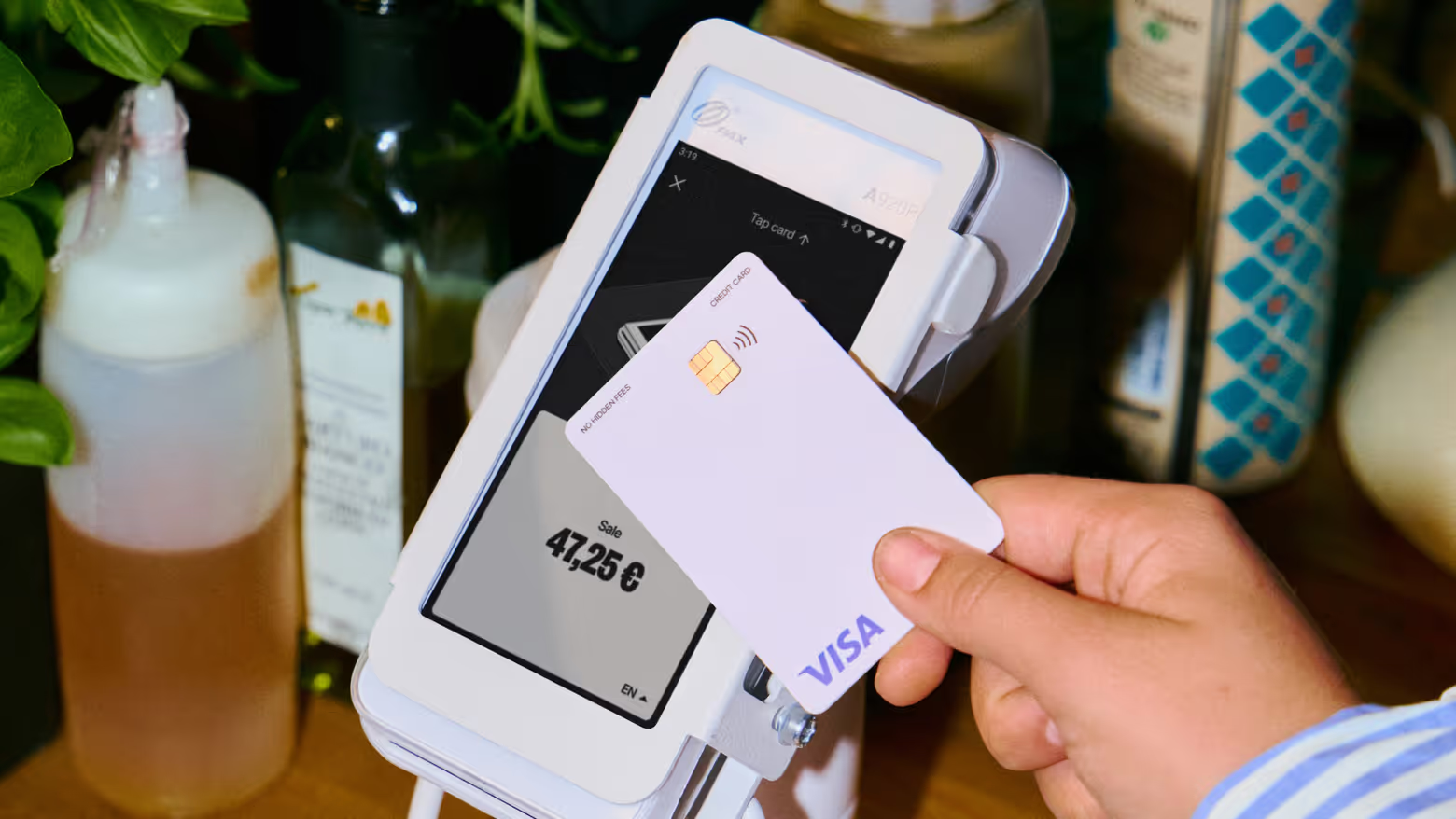
Accepting payments for any business, anytime, anywhere
Two solutions designed to get you paid.

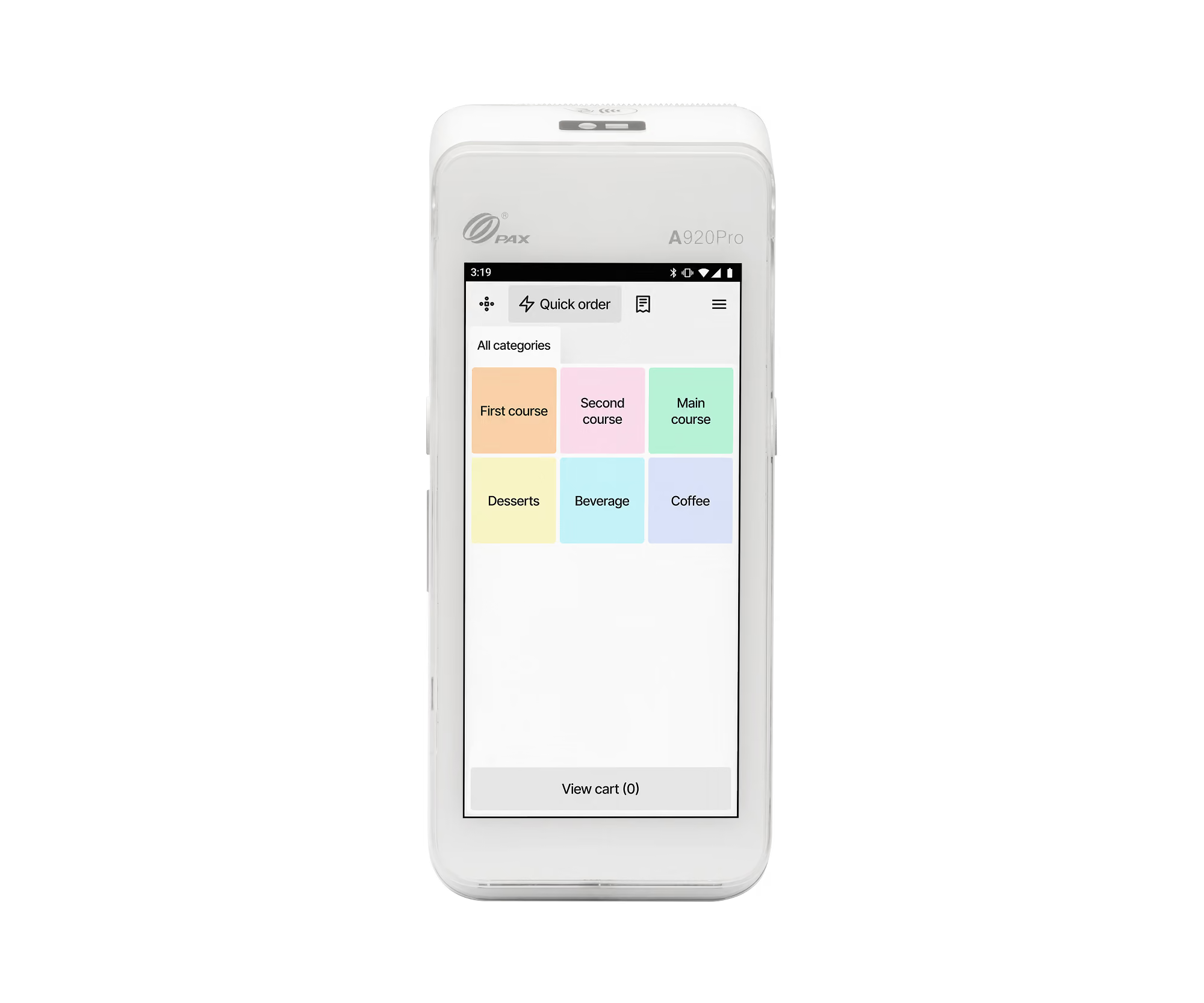

Getting paid starts here
Let us get you set up to accept card payments and manage orders in one place. Get started today and see how smooth running your business can be with Flatpay.

